



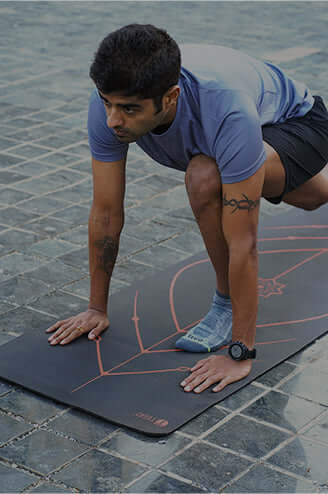

At TEGO, we say Hard Work Shows. What we’ve learned through sport, science, and the everyday athletes in our community is that hard work isn’t defined by intensity alone. It’s defined by repetition, sustained over time.
Anyone who has trained consistently while balancing a full-time job, relationships, and a life outside of fitness understands this reality. Progress rarely feels dramatic in the moment. In fact, it often looks boring. But boredom is where meaningful change actually happens.
Why Repetition Is the Hardest Skill to Master
Motivation is exciting. Repetition is demanding.
Research from behavioural psychologist Dr. Wendy Wood shows that nearly 45% of our daily actions are habits rather than conscious decisions. That means the behaviours that last aren’t powered by willpower. They’re powered by systems that remove choice. Neuroscience reinforces this idea. Repeated actions strengthen neural pathways through a process called myelination, making behaviours faster, easier, and eventually automatic.
This is why elite performance—whether in sport or life—often looks effortless from the outside. The uncomfortable truth is that repetition is hard precisely because it asks you to show up without novelty. There’s no adrenaline spike, no instant reward, and no dramatic payoff in the moment. There’s only quiet consistency. That is discipline.
Everyday Athletes Don’t Chase Extremes. They Chase Sustainability.
The everyday athlete isn’t training for spectacle. They’re training for longevity.
They run before work, train between meetings, and fit mobility into hotel rooms or strength sessions into packed weeks. Their guiding question isn’t “How hard can I go today?” but “Can I repeat this tomorrow?” That shift in thinking is where repetition becomes a competitive advantage.
Across the TEGO community, this pattern is clear. The people who make the most progress aren’t the ones who train the hardest in a single session. They’re the ones who train consistently across months and years. They don’t rely on motivation; they rely on structure. And maintaining structure over time is hard work.
Running: Where Repetition Builds Real Strength
Running is one of the clearest examples of repetition at work.
Many new runners believe improvement comes from running farther or faster as often as possible. But endurance research consistently shows that frequency matters more than volume. Three to four repeatable runs a week almost always outperform sporadic “big effort” sessions. Tendons, joints, and aerobic systems adapt through repeated exposure, not exhaustion.
Easy runs, recovery runs, and short runs that don’t look impressive on Strava are what build resilience. The strongest runners aren’t chasing personal bests every session. They’re focused on repeating manageable effort over long periods of time. That approach is harder, smarter, and far more effective.
HYROX: Repetition Under Fatigue
HYROX has become a global benchmark for hybrid fitness because it exposes something most training styles hide: your relationship with repetition under fatigue.
Success doesn’t come from being explosive once. It comes from repeating movement patterns—sled pushes, lunges, wall balls, running—when your heart rate is already elevated and your legs are heavy. HYROX rewards aerobic bases built through repeated running, strength earned through consistent sub-maximal training, and movement efficiency refined over hundreds of reps.
The athletes who perform best aren’t the ones who trained the hardest once. They’re the ones who repeated the basics until those basics became unshakeable. It’s not glamorous or viral, but it’s brutally honest.
Repetition Isn’t the Opposite of Hard Work—It Is Hard Work
It’s easy to go all in for two weeks. It’s hard to stay in for two years.
Repetition demands patience in a culture addicted to immediacy. It requires humility in a world that rewards spectacle. It asks you to trust the process long before results are visible. This is why repetition filters people—and why hard work eventually shows.
Not in dramatic transformation photos, but in posture, stamina, confidence, and control. In how you move, how you recover, and how you show up day after day.
Designing a Life That Supports Repetition
Consistency doesn’t happen by accident. It’s designed.
Environment matters. Tools matter. Rituals matter. Repetition thrives when friction is removed—when the barrier to starting is low enough that you don’t negotiate with yourself. When training becomes something you do, not something you debate.
This philosophy is behind everything TEGO creates: gear that supports showing up, not showing off. Because when repetition is supported, hard work becomes inevitable.
What 2026 Actually Demands
What the coming year demands isn’t a new version of you or a more extreme one. It demands a more consistent one.
Instead of asking how hard you should train, ask what hard thing you can repeat. Repetition may look boring, but boredom, repeated with intent, is how strength is built.
And in the end, hard work always shows.


