
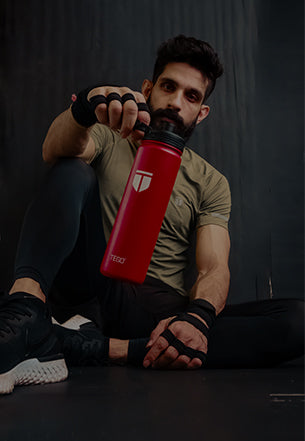
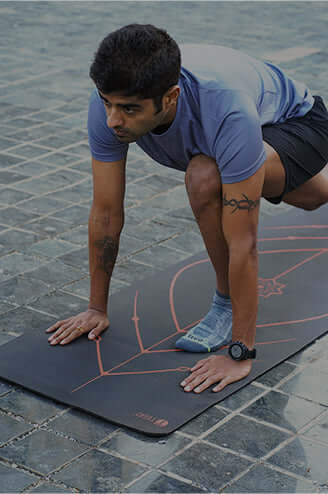

Atul Kasbekar dropped out of a chemical engineering degree to pursue photography — a decision that would go on to shape three decades of Indian visual culture. After training in California, he returned to Mumbai and built a career spanning iconic advertising campaigns, some of the country’s most recognisable faces, and later, critically acclaimed film production.
He is widely regarded as one of India’s leading creative entrepreneurs — defined as much by curiosity as by the body of work he has built.
Away from the lens and the edit suite, his focus shifts. The practice is quieter, more repetitive, less visible. Yoga, daily training, and a structured routine form the backbone of how he moves — and increasingly, how he thinks.
The Frame
When he talks about his life, the reference point isn’t aesthetic. It’s structural.
“I think of my life as a motion picture. You don’t remember every scene in your favourite movie — you remember moments. I want the motion picture of my life to be a blockbuster. I want lots of memorable scenes.”
It’s not about perfection. It’s about accumulation.
The Blockbuster Standard
For him, this isn’t metaphor — it’s method.
He trains seven days a week. Mornings are protected with the same intent as a major shoot. Very little is treated as non-negotiable — except the routine.
The idea is straightforward: construct the days well enough, and the larger arc begins to take care of itself.
Some moments arrive unplanned — an unexpected opportunity, a failure that resets direction, a conversation that lands differently than expected.
Others require intent.
“Some will happen organically,” he says. “Some I will make happen.”
The One Problem
He is equally clear about the hierarchy of priorities.
“You can have a hundred problems until you have a health problem — and then you only have one problem.”
It’s a line that simplifies everything else.
Health isn’t an extension of life. It’s the condition that makes the rest of it possible. The body isn’t a side project — it’s infrastructure.
What Fitness Actually Means
There’s little interest in fitness that looks the part but doesn’t hold up in practice.
“True fitness is a combination of strength, flexibility and endurance. If you look like the side of a house but can’t touch your toes — what’s the point?”
The objective isn’t aesthetic. It’s functional.
The ability to move well. To remain capable. To carry your own weight — literally and otherwise — across time.
“When I’m 80, I don’t want to ask the young man next to me to help me with my bag.”
That’s the benchmark. Not a peak, but a baseline that sustains.
The Kareem Lesson
He points to Kareem Abdul-Jabbar as an example of what that looks like in practice.
Kareem played professional basketball until 41 — competing in one of the most physically demanding sports, against athletes decades younger. When asked how he sustained it, the answer was simple.
“Yoga.”
“The truth was there all along,” Kasbekar says.
Longevity doesn’t come from intensity alone. It comes from range, recovery, and consistency. Pushing builds capacity. Maintaining extends it.
Small Accretion
The mat, he admits, is an equaliser.
No matter how long you’ve been practicing, there are good days and bad ones. A session that feels effortless is often followed by one that feels like starting over.
“You’ll have a spectacular day on the mat, then the next day it’s a disaster. It’s humbling.”
There’s no workaround for that cycle.
“You need to be at it, at it, at it to have more good days than not.”
That’s where the real work sits — not in standout sessions, but in repetition.
Small, daily increments that compound over time.
“It’s small accretion every day,” he says. “Consistency. That’s it.”


