


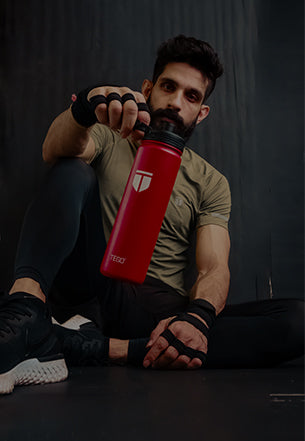
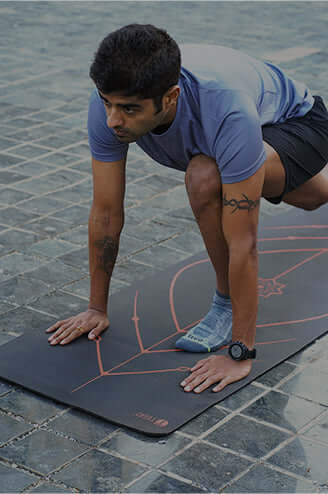

Anmol Gupta has spent fifteen years in gyms, on courts, and inside organisations — always asking the same question: what does it actually mean to perform?
There is a particular kind of athlete who never quite stops. Not because they're chasing records or podiums, but because movement is the medium through which they make sense of the world. Anmol Gupta is that kind of athlete.
He started early. Basketball in school — state-level, club-level, the full arc of a kid who loved competing. By 2011, that competitive instinct had found a second home in the gym. Standard stuff at first: isolation exercises, the usual split. But even then, the desire to understand why the body responds the way it does was already forming.
THE CROSSFIT TURN
In 2014, he discovered CrossFit — and it reconfigured something. It wasn't just the programming. It was the fact that you were always picking up a new skill. Olympic lifting, gymnastics, rowing, handstands. The gym stopped being a place where you maintained things and became a place where you built them. And then there was the collective: the group of people around you at 6am who were suffering and improving alongside you. That sense of shared effort left a mark.
"The moment fitness stopped being something I did for myself and became something I did with people — that's when it really changed."
He finished his graduation in 2014, spent two years in finance, and by 2016 had enrolled in an MBA — quietly starting to coach on the side at Blackbox in Hauz Khas. Finance was the plan. Coaching was increasingly the reality. By the time a placement offer came, the choice was already made. He turned it down.
BUILDING
Leaving a guaranteed career to coach full-time is one kind of bet. Building a product around coaching is another. Anmol launched Endure — an app built around training protocols focused on endurance — and for a while, it worked. Then the world went indoors.
The lockdown of 2020 could have been a full stop. Instead, it was a stress test he passed in two directions simultaneously. Online coaching exploded — he was running sessions from 6am to 10pm, training people across India, the Middle East, and beyond. And somewhere in between, he found running.
He'll be the first to tell you he never loved it. Running had always felt like the thing fitness people reluctantly did. But lockdown has a way of stripping excuses, and there is no substitute for what running gives you — the rhythm, the solitude, the honest feedback of the ground under your feet. He ran. It stuck.
COMMUNITY AT SCALE
In 2023, he got an opportunity at Zomato to become their founding Chief Fitness Officer — stepping into a 5,000 sq ft gym that he helped build from the ground up inside one of India's most demanding organisations.
What he found there wasn't surprising, but it was illuminating. In a company where people routinely work fifteen-hour days, the problems aren't abstract. There are people with sleep disorders. There are people eating badly, not out of ignorance, but out of overwhelm. There are people whose stress is legible in their bodies if you know how to read it.
His answer wasn't a gym programme. It was cohorts. Identify a problem — poor sleep, poor nutrition — and bring twenty people together to solve it. The broader fitness community grew from 500 to 2,500. Gym attendance went from 250 a month to over 900. Not because he marketed it, but because people could feel the difference. He left with a cleaner understanding of what it actually takes to shift behaviour inside large groups of people.
"Everyone has a keystone habit. One thing that, if you get it right, makes everything else easier. The work is finding out what that is for each person."
THE LONG GAME
In 2024, he joined Temple's founding team, leading science and research. The mission was ambitious: to establish a global benchmark for brain health, something as measurable and actionable as HRV has become for physical recovery. It was fitness logic applied to the mind — what gets measured gets managed.
Post-Temple, he turned to consulting — working with individuals on holistic lifestyle design. How to read your health metrics. How to build habits that compound rather than collapse. His philosophy is deceptively simple: everyone already has a keystone habit, something they do consistently that shapes everything else. His job is to find it, sharpen it, and let it do the work.
Now, in 2025, he's at the helm of launching Spartan Fitness in Gurgaon this May. A new market, a new fitness community, but the same question that has shaped his journey since 2011: how do you build something that genuinely makes people better?
EVERYDAY ATHLETE
What makes Anmol an everyday athlete isn't the volume of training or the list of credentials. It's something quieter: the refusal to treat fitness as a phase or a product. For him, it's the infrastructure through which everything else — work, thought, community, recovery — gets better.
He didn't become a coach because sport was easy. He became one because he understood, early, that the hard work of moving your body honestly is one of the few things that shows you exactly who you are — and gives you a chance to change it.
That's the point. Hard work shows.


